Stress Crusher Relaxing Games
Mad1 GamesCasual
4.3103.00 Reviews
- Version
- 6.79
- Installs
- 10.00M
- Age Rating
- Teen
Screenshots

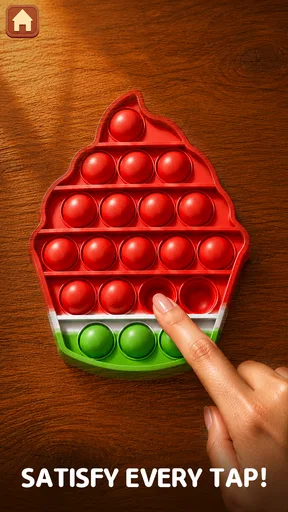
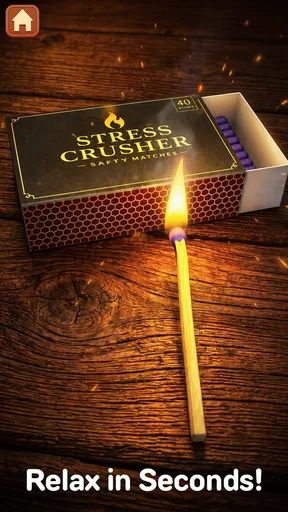


Our Review of Stress Crusher Relaxing Games
 Analysis by Appyee
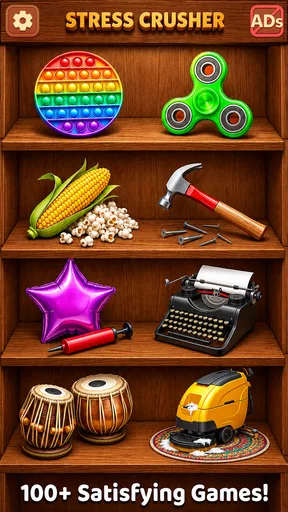
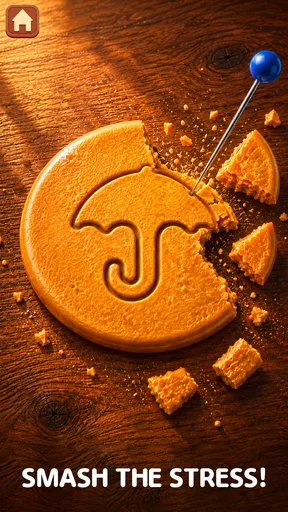
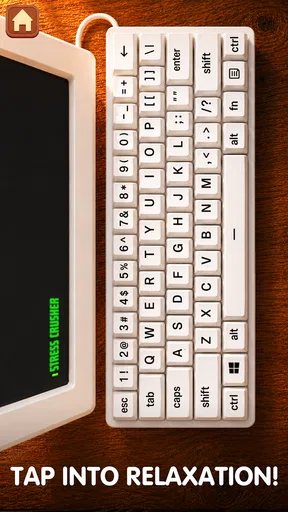
I spent time with Stress Crusher Relaxing Games as a quick, casual way to settle my attention rather than as a game I would play for long competitive sessions. Its appeal is simple: short ASMR and fidget-style activities that give my hands and eyes something calm to do. That makes it easy to pick up between tasks, after a noisy commute, or when I want a small break without learning a complicated system.
Mad1 Games presents it as a free casual game for Android, and the overall idea is clear from the first moments. The experience is built around satisfying interactions and a relaxed rhythm, not story progression, strategy, or reflex-heavy challenges. I found that focus useful because it keeps the barrier to entry low. I can open it without remembering where I left off or preparing for a demanding session.
The game has attracted a broad audience, with an average rating of 4.4 from around 41 thousand ratings and more than 10 million installs. Those figures suggest that its straightforward stress-relief concept works for many people, although popularity alone does not make it suitable for every player. I would recommend it most to someone who enjoys tactile mini-games and wants an informal way to pause during the day.
How Stress Crusher feels during everyday use
I find the best way to judge Stress Crusher is to treat it as a small pause rather than a game that needs mastering. In this section, I’ll focus on how its quick, sensory activities fit around ordinary routines and why a little intention can make those breaks more useful. That practical perspective also makes it easier to decide what to try when you first open it.
Quick sessions are its strongest advantage
The first thing I noticed is how naturally the game fits into spare minutes. I could use it while waiting for an appointment, taking a break from studying, or winding down before bed. Unlike a conventional casual game with levels that demand concentration, this format feels more forgiving. If I only have a few minutes, I do not feel that I am abandoning an important objective.
That speed of access is also why I would not compare it directly with puzzle games such as match-three titles. Those games usually ask me to plan moves, chase a score, or manage limited turns. Here, the reward is more immediate and sensory. I am not trying to improve a strategy; I am trying to create a comfortable pause. For that purpose, the uncomplicated design is a strength.
There is a trade-off, though. Players who need goals, unlocks, competition, or a strong sense of progression may find the experience thin. The same lack of pressure that makes it relaxing can make it feel repetitive when I am in the mood for a deeper game. I see it as a pocket relaxation tool, not a replacement for a full casual gaming library.
What happens when I use it repeatedly
During a short session, the sensory focus is pleasant because I can concentrate on one small interaction at a time. When I return several times in one day, the novelty naturally becomes less powerful. That is not a flaw unique to this game; fidget activities depend heavily on mood and repetition. I get the best results when I treat it as a brief reset instead of leaving it open indefinitely.
A useful habit is to decide what I want before opening it. If I am mentally restless, I use a short session to interrupt the loop of checking messages or switching between apps. If I am already tired, I avoid turning the game into another long screen session. This distinction matters: relaxing interaction can help me pause, but it is not the same thing as sleep or a substitute for professional support when stress is serious.
The ASMR angle will also depend on personal sensitivity. Some people enjoy repetitive, satisfying sounds and movements, while others find particular effects distracting. I would begin with a low-expectation test rather than assuming that every activity will feel soothing. The game works best when its sensory style matches the player, and that is subjective.
Performance expectations on different phones
The game supports Android devices running version 7.0 or later, so its compatibility reaches back to older phones as well as newer models. That is helpful for anyone using a spare device or keeping an older handset for simple entertainment. Still, compatibility does not guarantee the same experience on every phone. Screen responsiveness, available storage, background activity, and general device age can affect how comfortable any interactive game feels.
On a modern phone, I would expect the short, casual format to feel easier to manage than a graphically intensive action game. It does not present itself as a large open-world title or a demanding multiplayer experience. That makes it a sensible choice for someone who wants something lighter than a typical high-performance game. I would nevertheless keep the operating system updated and close unusually heavy background tasks if interactions feel delayed.
Older hardware is where expectations should be more modest. A phone that already struggles with ordinary apps may still launch a simple game, but transitions and touch response can vary. I would also avoid judging the app solely by a brief slowdown caused by a crowded device. Restarting the phone, freeing some space, or closing other active apps is a practical first step before deciding that the game itself is unreliable.
Resource use and heavy-use moments
I would describe the workload as more suitable for casual use than for long, uninterrupted play. The game’s purpose does not require the sustained processing associated with demanding 3D games, but any app that keeps the display active and responds continuously to touch can still consume battery over time. For that reason, my preferred routine is a few short sessions rather than using it as a background activity for hours.
Heavy use is most likely to become noticeable when I repeatedly move through activities, keep the phone at high brightness, or play while many other apps are active. Those factors can make a modest game feel less efficient on an older battery. If I am travelling, I would use it when the phone has enough charge rather than assuming that a relaxing game has no impact on battery life.
Another practical point is heat. If the handset becomes warm during any mobile game, I would pause and let it cool instead of continuing simply because the activity is casual. Heat can come from the device, the battery, the screen brightness, or other apps, so it is not fair to assign every performance change to Stress Crusher alone. The sensible approach is to observe whether the issue appears only during this game and whether it disappears after reducing the overall load.
Stability and recovering from interruptions
For a game designed around short breaks, recovery matters almost as much as initial speed. I often open relaxation apps while moving between tasks, which means a call, notification, or quick switch to another app can interrupt the session. I prefer games that let me return without feeling punished for leaving, and this type of casual format is naturally better suited to interruptions than a timed challenge.
My advice is to treat each visit as disposable rather than assuming every moment needs to be preserved. That mindset removes much of the frustration caused by an interruption. If the app ever reloads after being pushed into the background, I would consider that more tolerable here than in a story game or a competitive match, because the central value is the immediate activity rather than a carefully built run.
As with any Android app, a clean recovery routine is useful if something behaves unexpectedly. I would first return to the game after a normal restart, then check whether the phone is low on space or running an older system. Repeated crashes or severe touch problems would be a reason to stop relying on it for important breaks, even if the game remains enjoyable when it works properly. A relaxation app should reduce friction, not become another source of irritation.
Where the free model fits
Stress Crusher is free to install, which makes it easy to try without committing money upfront. That is particularly appropriate for this kind of app because the value is personal. One player may enjoy the tactile loop immediately, while another may lose interest after a few minutes. Being able to test the experience first is more useful here than it would be for a game with a familiar competitive format.
There are in-app purchases priced at $4.99 per item. I would keep that in mind before treating the game as completely cost-free. The right question is not simply whether a purchase exists, but whether the free experience already gives enough relaxation for your routine. If it does, there is no reason to spend just because an optional item is available. If you are sensitive to interruptions or purchase prompts, review each screen carefully and keep your spending limit clear.
The age rating is Teen, so I would not automatically choose it as a children’s app. Parents should make their own decision based on the child, the device, and how they handle games with optional purchases. For an older teenager or adult looking for a simple calming activity, the rating is less of a concern than personal tolerance for sensory effects and screen time.
Who should choose it, and who should skip it
I think it suits people who want a low-pressure distraction, enjoy ASMR-inspired interactions, or like fidget toys but do not want to carry a physical one. It can also work for someone who needs a gentle transition between demanding tasks. A student could use it after a study block, an office worker could use it during a short pause, and a traveller could use it when a conventional game feels too mentally demanding.
I would skip it if your main goal is a compelling campaign, strategic depth, online competition, or measurable skill improvement. A traditional puzzle game is a better choice when you want decisions to matter. A rhythm game is better when you want timing and challenge. A meditation app may be more appropriate when you want guided breathing or structured mindfulness rather than interactive sensory play.
I would also be cautious if repetitive sounds or visual effects tend to bother you. The same details that make an ASMR game satisfying for one person can be tiring for another. Trying it in a quiet setting first is a better test than judging it by the category alone. If the experience makes you more alert or annoyed, it is not fulfilling its purpose for you, regardless of its rating.
Small habits that make the experience better
My first practical tip is to use it as a deliberate transition, not as something to fill every empty second. Opening it immediately whenever I feel bored can turn a calming tool into another automatic scrolling habit. I get more value when I choose a clear stopping point, put the phone down, and return to the task that was waiting.
My second tip is to test it under different sound conditions. If the sensory audio is the main attraction, headphones may change the experience, but I would keep the volume comfortable and remain aware of my surroundings. In public places, silent or lower-volume use may be more considerate and less distracting. The game’s relaxing quality should not come at the cost of missing an announcement, conversation, or road hazard.
My third tip is to separate performance problems from sensory preference. If the game feels unpleasant, I would ask whether the issue is lag, brightness, sound, repetition, or simply the wrong mood. Lowering brightness, closing background apps, and trying a shorter session can address device strain. If the style itself is irritating, switching to a quiet puzzle or a guided relaxation option is the better solution.
Finally, I would avoid making purchases during a tired or emotionally stressed moment. The free entry point is enough to decide whether the core experience belongs in your routine. If an optional item seems appealing later, consider whether it adds lasting value or merely extends a brief burst of novelty. That approach keeps the game in its proper place: a small source of comfort rather than an impulse purchase.
My performance verdict
After using it as intended, I see Stress Crusher as a lightweight-feeling casual game whose main performance advantage is its modest ambition. It is easier to fit into short breaks than a demanding action title, and its interruption-friendly concept makes recovery less important than in progress-heavy games. On a reasonably maintained Android phone, it should be approached as a quick sensory activity rather than a long-running application.
Its limitations are equally clear. Repetition can reduce its appeal, sensory effects will not suit everyone, and older or crowded devices may still show the usual signs of strain. The free model is convenient, but the optional $4.99 items mean I would pay attention before confirming a purchase. The Teen rating also means I would not present it automatically as a universal family game.
Overall, I would recommend it to a friend who wants a simple, tactile pause and already enjoys ASMR or fidget-style entertainment. I would not recommend it to someone searching for depth, competition, or a structured mental-health program. The strongest way to use it is in short, intentional sessions, with sensible expectations about battery, device age, and repetition. For that narrow but useful purpose, Mad1 Games has made a free casual option that is easy to try and easy to leave when another kind of relaxation suits you better.
Privacy and Permissions
See what permissions an app requests and how it handles your data.
- Wi-Fi connection information
- view Wi-Fi connections
- Other
- view network connections, full network access, control vibration, prevent device from sleeping
Verdict
Strengths of Stress Crusher Relaxing Games
- Simple mini-games are easy to learn and play during short breaks.
- Calming visuals and sounds create a peaceful, low-pressure experience.
- Works well for casual relaxation without requiring advanced gaming skills.
- Offers varied activities, helping prevent the experience from feeling repetitive.
- Suitable for users seeking a gentle distraction from everyday stress.
Limitations of Stress Crusher Relaxing Games
- Some mini-games may feel too basic for experienced mobile gamers.
- The relaxing format may not appeal to users seeking challenge or competition.
- Progression and rewards can feel limited compared with larger game apps.
- Audio and visual effects may become repetitive after extended sessions.
- Some features or content may depend on ads or optional in-app purchases.
Other Releases by Mad1 Games
View All
House Makeover: ASMR Cleaning
Casual4.5
Similar Picks in This Category
View All
My Talking Angela
Outfit7 Limited4.2

My Talking Tom
Outfit7 Limited4.3

Pou
Zakeh4.2

My Talking Tom 2: Pet Game
Outfit7 Limited4.3

Candy Crush Saga
King4.6

Bridge Race
Supersonic Studios LTD4.1
Frequently Asked Questions
What is Stress Crusher Relaxing Games?
Stress Crusher Relaxing Games is a casual mobile game collection designed to help players unwind through simple, soothing activities. Instead of focusing on competition or difficult objectives, it offers relaxing interactions such as tapping, sorting, matching, and other calming challenges. The experience is intended for short breaks, quiet moments, or anyone looking for a low-pressure way to pass time and reduce everyday tension.
How does Stress Crusher Relaxing Games help with relaxation?
The app uses uncomplicated gameplay, gentle visual presentation, and repetitive tasks that can be easy to follow without demanding intense concentration. Playing for a few minutes may provide a useful distraction from work, study, or daily responsibilities. However, it should be viewed as an entertainment and mindfulness aid rather than a medical treatment for stress, anxiety, or other mental-health conditions.
Is Stress Crusher Relaxing Games suitable for children and adults?
The straightforward controls and generally accessible gameplay make Stress Crusher Relaxing Games suitable for a broad audience, including older children, teenagers, and adults. Parents should still check the current age rating, advertising content, privacy information, and any in-app purchase settings before allowing younger users to play. Individual activities may vary in difficulty and appeal depending on the player’s age.
Does Stress Crusher Relaxing Games require an internet connection?
Some parts of Stress Crusher Relaxing Games may work without a constant internet connection, which can make it convenient for travel or offline breaks. Nevertheless, connectivity may be required for downloading the app, displaying advertisements, synchronizing progress, receiving updates, or accessing certain features. Because offline availability can change between versions and platforms, it is best to test the game after installation before relying on it without mobile data or Wi-Fi.
Is Stress Crusher Relaxing Games free to download and safe to use?
Stress Crusher Relaxing Games can generally be downloaded without an upfront charge, but the exact business model may include advertisements, optional purchases, or other limitations. Before installing, users should review the permissions requested, privacy policy, developer information, and store reviews. Avoid entering payment details unless necessary, and use parental controls or purchase authentication if children will have access to the device.
Play our best games!


